
When joined with wisdom and equanimity, metta has the power to dispel fear and restore health.
Of the meditation practices I’ve learned, metta has been the most practical, effective, and easy to apply.
Sensing rising impatience when stuck in traffic? Radiate goodwill to all the other drivers.
Feeling tense when dodgy-looking passengers board the bus and sit nearby? Extend kind wishes to everyone in the vicinity, especially the scary ones.
Impatient or bored when standing in line? Notice every person in the lineup and silently wish them well.
Walking down the street? Smile at everyone who passes.
Depressed and anxious? Extend metta inward to the one who is experiencing these dark feelings.
Lonely? Wrap the lonely one in an imaginary blanket of caring and warmth.
Ill? Send healing energy to the body.
Terrified about the state of the planet? Seek out and nourish the goodness that prevails in spite of everything.
When joined with wisdom and equanimity, metta has the power to dispel fear and restore health. The word metta is usually translated as lovingkindness, friendliness, goodwill, or benevolence. It can be practised and experienced on many levels — from a basic commitment to do no harm to a profound level of experiencing universal benevolence towards all beings without exception.
Whatever level practice or experience metta at we are bound to receive some kind of benefit. The Buddha cited eleven specific rewards to be gained from practising metta, including: sleeping peacefully, waking happily, having no nightmares, being loved by humans, being loved by non-humans, protection by deities, immunity to fire/poison/weapons, swift concentration, a radiant complexion, dying unconfused, and potential rebirth in higher realms.
Even if some of these rewards seem fantastical, most of us can probably accept that living one’s life with a mind inclined towards kindness is bound to make us feel more peaceful and secure. Perhaps we’ve noticed that when a person filled with kindness and serenity enters a room, the energy of that room lifts.
In one story from the Buddha’s time, a number of monks were meditating in a forest grove when they became fearful of the tree spirits that lived in the grove. The tree spirits were unhappy that the monks had taken up residence in their home and created disruptive sounds, frightening visions and unpleasant odours to make them go away.
When the monks complained to the Buddha about this, he said he would give them a “weapon” to overcome their tormenters. He taught them the Metta Sutta (see below) and told them to recite it aloud regularly. The monks did as instructed. The tree spirits were so pleased with the sound of the metta chant that they allowed the monks to stay and even offered them food and drink.
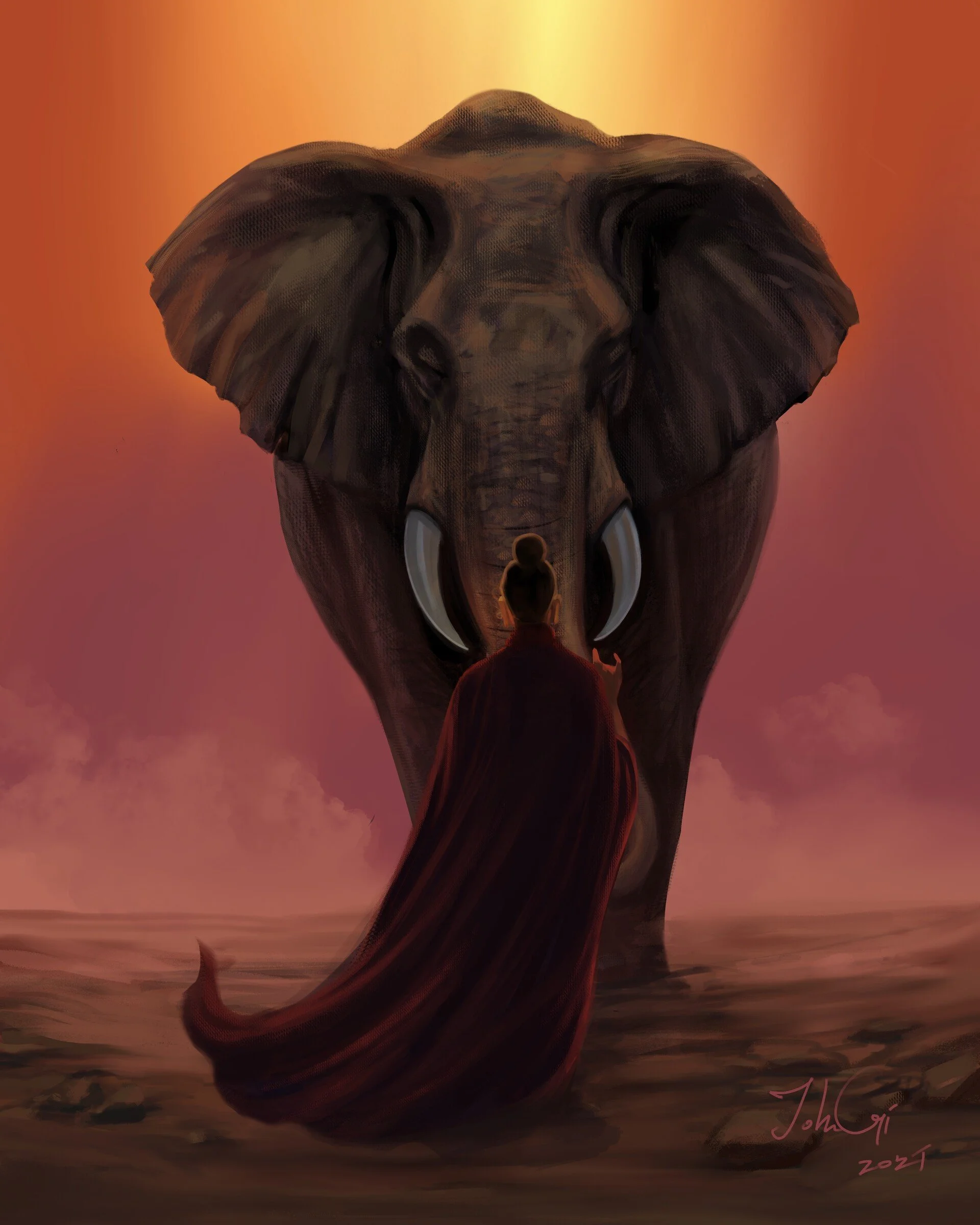
Another famous story is told of how a wild elephant was set loose upon the Buddha by one of his enemies. As the raging elephant charged, the Buddha radiated goodwill towards the animal. As the elephant came near, it suddenly stopped and dropped to its knees, completely tamed.
These stories illustrate the power of our thoughts. According to some, our thoughts generate force fields, like electromagnetic energy. Our thoughts, our beliefs, create our reality.
For instance if we put out the energy of mistrust, we tend to be met with mistrust. If we put out the energy of kindness, we tend to be met with kindness. Like attracts like, as the saying goes.
My late parents were polar opposites. Both fundamentally good people, they generated different kinds of energy. My father tended to be mistrustful and worried a lot whereas my mother was easy going and saw the good in everyone. These different outlooks were written on their faces — my father’s face was often tense, etched with a semi-permanent frown, whereas my mother’s face was more relaxed and happy.
The energy they radiated meant they had different experiences when they travelled. My mother was almost always waved through airport security without incident. No one ever suspected her of anything. My father, however, was often stopped to undergo extra security screening.
Metta is very practical. When we radiate metta, people feel safe around us. And that makes us feel safer.
Metta also has practical health applications. It’s pretty well-accepted that there is a mind-body connection, that our thoughts have a direct bearing on our well-being.
Anecdotally, its been observed that when people who are ill have a positive mindset, and generate kindness towards themselves and to those around them, they suffer less and may recover more quickly.
It’s also been demonstrated that some people have psychic healing qualities. Their presence can promote healing in another person or animal or even a plant. (It’s believed that everyone has that ability to a certain extent.)
Oskar Estebany was a Hungarian-Canadian psychic healer who in lab experiments at McGill University produced healing results on mice and plants. Before coming to Canada, he served as a cavalry officer in the Hungarian army. When his beloved horse became gravely ill, Estebany spent all night in its stall, praying over the animal and talking to it while massaging its body. By morning the horse was well. When word got out, other soldiers brought their sick horses to him, as well as their pets. Later Estebany healed human beings with his method of “laying on of hands” which evolved into what we know today as Therapeutic Touch.
Estebany was described as a kind and gentle person who believed he was acting as a channel for natural healing energy that is available to everyone.
The idea that our thoughts generate — or tap into — healing energy that affects beings around us is not so far-fetched. When we generate the energy of metta, it may well be that people around us can feel it. We may be channelling a force field of healing and protection.
We can generate metta in a number of creative ways, in any place and circumstance. We can recite or chant a metta sutta regularly. We can use metta phrases in sitting practice. Off the cushion we can generate goodwill at any time to those around us. Not just people, but animals. Not just creatures, but plant life too. Even rocks, the earth, the planet, the stars. We can generate metta not just to others but to ourselves — our moods, our physical states, our mental states, our circumstances. We can offer goodwill to anyone and anything. It’s boundless.
—Nelle Oosterom
The Metta Sutta
This is what should be done
By one who is skilled in goodness,
And who knows the path of peace:
Let them be able and upright,
Straightforward and gentle in speech,
Humble and not conceited,
Contented and easily satisfied,
Unburdened with duties and frugal in their ways.
Peaceful and calm and wise and skillful,
Not proud or demanding in nature.
Let them not do the slightest thing
That the wise would later reprove.
Wishing: In gladness and in safety,
May all beings be at ease.
Whatever living beings there may be;
Whether they are weak or strong, omitting none,
The great or the mighty, medium, short or small,
The seen and the unseen,
Those living near and far away,
Those born and to-be-born—
May all beings be at ease!
Let none deceive another,
Or despise any being in any state.
Let none through anger or ill-will
Wish harm upon another.
Even as a mother protects with her life
Her child, her only child,
So with a boundless heart
Should one cherish all living beings;
Radiating kindness over the entire world:
Spreading upwards to the skies,
And downwards to the depths;
Outwards and unbounded,
Freed from hatred and ill-will.
Whether standing or walking, seated or lying down
Free from drowsiness,
One should sustain this recollection.
This is said to be the sublime abiding.
By not holding to fixed views,
The pure-hearted one, having clarity of vision,
Being freed from all sense desires,
Is not born again into this world.
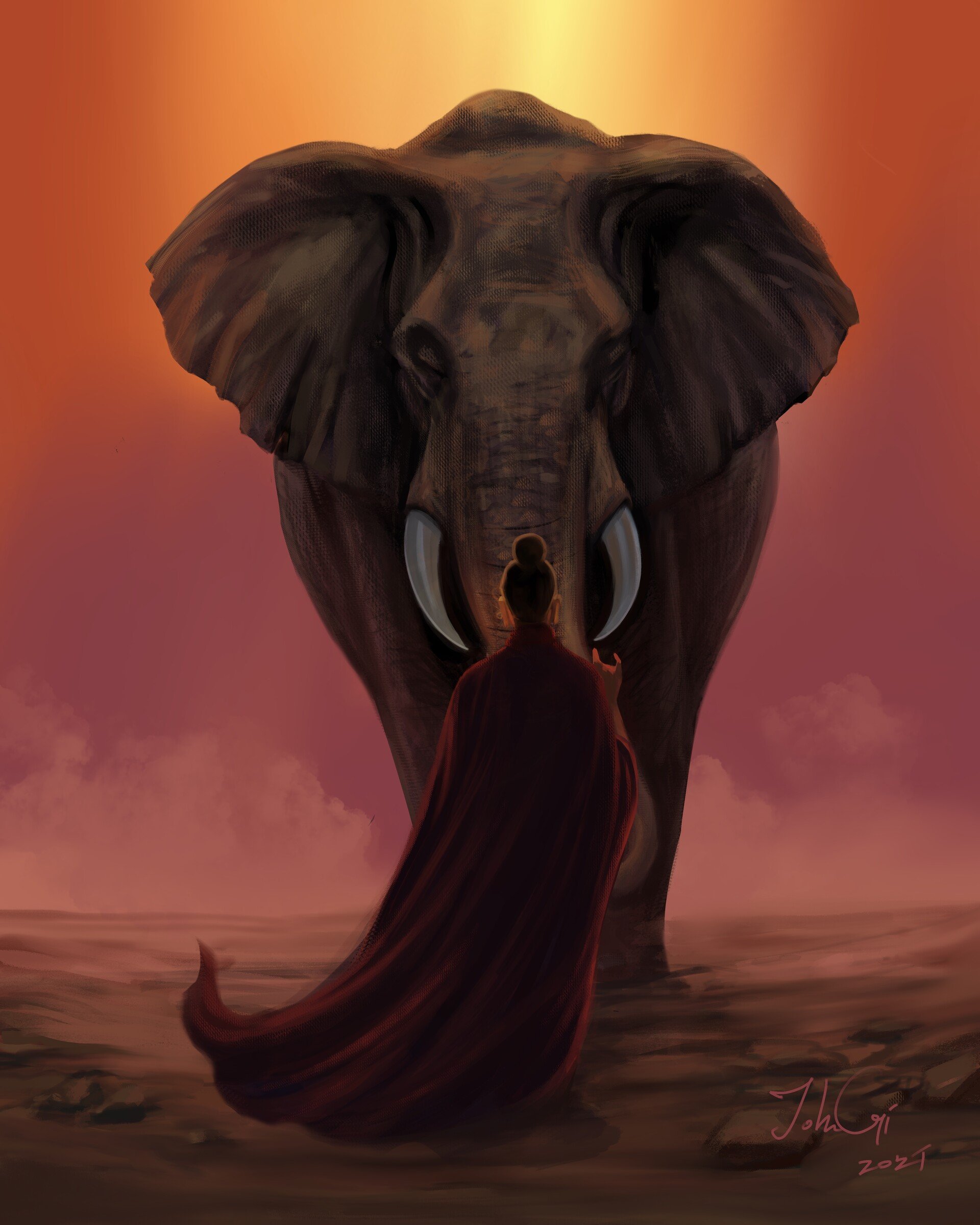
The elephant Nalagiri being tamed by the Buddha. llustration by John Gyi.